

In today’s fast-paced world, the misuse of prescription drugs has become a pressing concern, often overshadowed by the more publicised issue of street drugs. While many are aware of the dangers of illicit substances, fewer realise the potential risks associated with medications prescribed by healthcare professionals.
Please, if you’re reading this and are struggling with a misuse issue, don’t suddenly stop taking the medication Seek professional help from specialists like an Addiction Medicine Physicians, Psychologists, and Addiction Counselors. Stopping suddenly can be dangerous; supervised detox is crucial for your safety and well-being. Please reach out for support.
Drug Misuse – It’s not only about street drugs
When we think of drug misuse, images of street drugs such as cocaine, heroin, and methamphetamine might spring to mind. However, the reality is that prescription drugs, intended to alleviate pain or manage health conditions, can also be misused with serious consequences. The abuse of these medications, often perceived as ‘safe’ due to their medical origins, is both common and perilous.
What Are the Most Abused Prescription Drugs?
The most commonly abused prescription drugs encompass opioids like oxycodone and hydrocodone, benzodiazepines such as diazepam and alprazolam, stimulants including methylphenidate and amphetamine / dextroamphetamine, and barbiturates like phenobarbital. While these medications offer therapeutic benefits when used correctly, misuse can lead to severe health risks.
Ref. https://nida.nih.gov/sites/default/files/rx_drugs_placemat_508c_10052011.pdf
Opioids
Opioids, such as oxycodone (OxyContin) and hydrocodone (Vicodin), are typically prescribed for pain relief. They work by binding to opioid receptors in the brain, reducing the perception of pain. However, when misused, they can lead to dependence and, in severe cases, overdose.
Benzodiazepines
Medications like diazepam (Valium) and alprazolam (Xanax) fall under the category of benzodiazepines. They are often prescribed for anxiety and panic disorders, working by depressing the central nervous system. Abuse can result in drowsiness, confusion, and even respiratory failure.
Stimulants
Stimulants, such as methylphenidate (Ritalin) and amphetamine / dextroamphetamine (Adderall), are commonly prescribed for conditions like attention deficit hyperactivity disorder (ADHD). They boost attention, energy, and mood by increasing dopamine levels in the brain. However, misuse can lead to high blood pressure, rapid heartbeat, and anxiety.
Barbiturates
Barbiturates like phenobarbital are used to treat seizures and anxiety disorders. They function by depressing the central nervous system, producing a calming effect. When used other than prescribed, they can lead to respiratory depression and may be fatal in high doses.
What Are Over-the-Counter Drugs?
Signs of Prescription Drug Abuse
Recognising the signs of prescription drug misuse is crucial for early intervention and support. While the symptoms can vary depending on the specific medication and the individual, there are some general indicators that may suggest a person is using a prescription drug other than prescribed. These signs can be categorised into behavioural, physical, and psychological symptoms.
Behavioural Signs
- Secrecy or Deceptiveness: A person might become secretive about their medication, perhaps hiding pills or refusing to discuss their usage.
- Frequent Requests for Refills: They may frequently ask for or seem anxious about obtaining refills, even if not due.
- Taking Higher Doses than Prescribed: Using the medication in larger amounts or more often than directed.
- Mood Swings: Unexplained and rapid mood changes, from extreme euphoria to deep sadness.
- Social Withdrawal: Distancing from family, friends, and previously enjoyed activities.
Physical Signs
- Changes in Sleep Patterns: This could manifest as insomnia or oversleeping.
- Unsteady Movement: Difficulty with coordination or unsteady walking.
- Unexplained Weight Loss or Gain: Significant changes in weight over a short period.
- Slurred Speech: Difficulty in articulating words or slower speech.
- Drowsiness or Fatigue: Feeling constantly tired or lethargic.
Psychological Signs
- Increased Anxiety or Paranoia: Feeling excessively worried or fearful without a clear cause.
- Memory Issues: Forgetting things or having difficulty recalling recent events.
- Decreased Motivation: A lack of interest in tasks or activities that were once enjoyable.
- Depression: Persistent feelings of sadness, hopelessness, or disinterest in life.
- Impaired Judgement: Making decisions that are out of character or risky.
It’s worth noting that while these signs may indicate abuse of prescription drugs, they can also be symptoms of other underlying issues. If someone is displaying these signs, it’s advisable to approach the situation with empathy and concern. Remember, our admissions staff is here 24/7 to offer assistance and guidance over the phone. Your well-being is our priority.
What are the potential dangers of misusing OTC drugs?
OTC drugs, while easily accessible and often perceived as safe, can pose significant risks when misused. Misuse of these medicines, which are commonly found in many households’ medicine cabinets, can lead to a range of health issues. For instance, some individuals abuse these drugs to get high, while others might combine them with prescription drugs or street drugs, amplifying potential adverse effects.
One of the commonly abused prescription drugs includes opioids like oxycodone (OxyContin) and hydrocodone. These painkillers, when taken in doses higher than prescribed, can lead to overdose, trouble breathing, and even death. Stimulants, when abused, they can strain the central nervous system, leading to high blood pressure and heart problems. Sedatives like Valium (diazepam), Xanax (alprazolam), and Ambien (zolpidem) are prescribed for anxiety and sleep disorders but can cause severe drowsiness, respiratory issues, and overdose when abused.
The National Institute on Drug Abuse has highlighted the growing concern of prescription drug abuse and its close ties to OTC drug misuse. Combining substances, like snorting a stimulant pill with a CNS depressant, can be particularly dangerous. It’s also worth noting that some individuals, in their quest to abuse prescription drugs, might resort to actions like crushing and snorting pills, which can have immediate and harmful effects on the nervous system.
Ref. https://nida.nih.gov/publications/research-reports/misuse-prescription-drugs/overview

Drug Abuse – What to Consider
Navigating the complexities of prescription drug abuse and addiction, whether it’s a personal experience or a concern for a loved one, requires a blend of understanding, compassion, and informed action. Here are some potential steps and considerations for both scenarios:
If You Think You Might Be Misusing Drugs
- Recognise the Situation: It may be beneficial to acknowledge that there could be a challenge to address.
- Consider Professional Guidance: It might be helpful to consult a healthcare professional or counsellor who can offer insights tailored to your situation.
- Stay Informed: Familiarising yourself with the potential implications and side effects of the medication you’re taking could be beneficial.
- Explore Support Groups: Engaging with others who might have faced similar challenges could offer a sense of community and shared experiences.
- Maintain Connections: Keeping in touch with loved ones and sharing your feelings and concerns may provide emotional support.
- Seek Assistance: Our admissions team is available for you 24/7, ready to assist and guide over the phone.
If You’re Concerned About a Loved One or Family Member
- Initiate a Conversation: It might be worth approaching your loved one with empathy, sharing your concerns without casting judgement.
- Educate Yourself: Gaining an understanding of the specific drug in question and its potential effects could aid in discussions.
- Encourage Professional Guidance: Suggesting the possibility of seeking insights from healthcare professionals or therapists specialising in substance abuse might be beneficial.
- Offer Your Support: Being present for them, whether that’s considering therapy sessions together or simply listening, could make a difference.
- Refrain from Enabling: While support is crucial, it’s also essential to ensure that it doesn’t inadvertently encourage misuse. This might involve setting boundaries or seeking advice on supportive strategies.
- Stay Updated: Joining family support groups or considering counselling sessions could offer insights on how best to assist your loved one.
- Remember: Our admissions team is here for you and your loved ones, available 24/7 to provide assistance and guidance.
In both scenarios, it’s worth noting that the journey towards understanding and potential recovery can have its moments of challenge and clarity. Patience, empathy, and informed decisions may play a pivotal role in navigating this path.
How do people typically access misused prescription drugs?
Many people who abuse prescription medicines often source them from parents’ medicine cabinets or order prescriptions online unless verified by trusted sources. It’s essential to be cautious and ensure medications are stored securely.
How common is prescription drug abuse?
Prescription drug abuse is unfortunately very common. It affects people of all ages and backgrounds and has become a significant public health concern.
Find detailed statistics here https://drugabusestatistics.org/prescription-drug-abuse-statistics/
How can I prevent prescription drug abuse?
To prevent prescription drug abuse, it is important to follow the prescribed dosage and instructions, only use medication prescribed to you, properly store and dispose of medications, and communicate openly with your healthcare provider about any concerns or questions you may have.
Reasons Why People Misuse Prescription Drugs
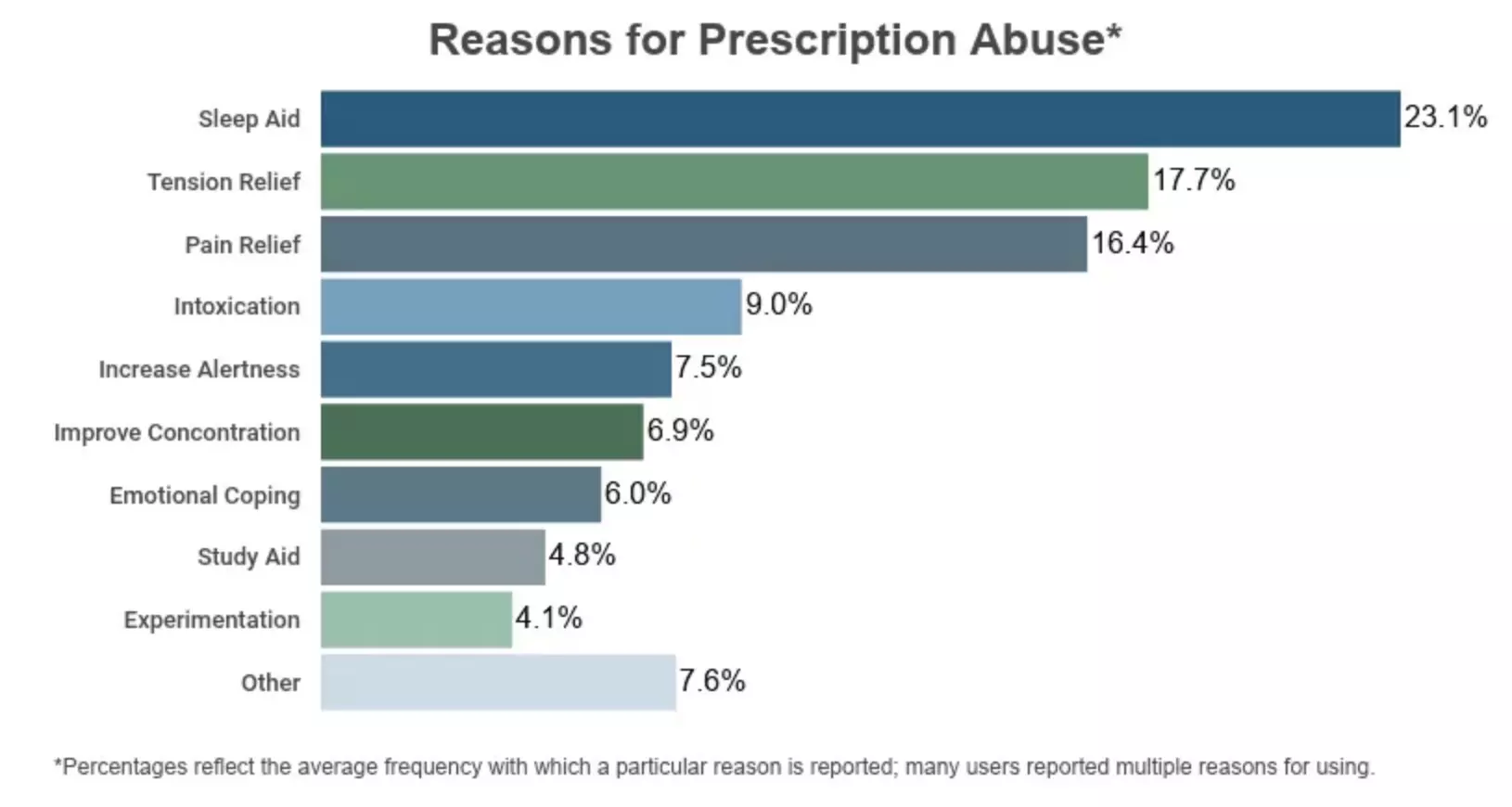
People might misuse prescription drugs for various reasons. Some seek the euphoric or calming effects these drugs can offer, while others might misuse them to cope with stress, pain, or mental health challenges. Additionally, societal pressures, curiosity, and the misconception that prescription drugs are safer than illicit substances can also play a role.
Ref. https://drugabusestatistics.org/prescription-drug-abuse-statistics/
Is there treatment available for prescription drug addiction?
Yes, there is. Treatment for prescription drug abuse is both available and tailored to address the unique challenges it presents. It’s essential to understand that prescription drug abuse, whether involving commonly prescribed medications or over-the-counter drugs, can have profound implications on one’s well-being.
However, with the right guidance and support, individuals may find a path to recovery. Various therapeutic interventions, ranging from counselling to medically supervised detox, might be beneficial. It’s always advisable to consult with healthcare professionals who can offer insights based on individual circumstances. Remember, seeking help is a sign of strength, and with the right approach, recovery is a very real possibility.
Find help for Prescription Drug Addiction
Navigating the complexities of prescription drug misuse can be a daunting journey, but you don’t have to face it alone. At Crossroads Antigua, we understand the challenges and nuances of both prescription and over-the-counter drug misuse. Our dedicated team, deeply rooted in expertise and compassion, is here to guide you or your loved ones towards a path of recovery. Recognising the signs and seeking help is a pivotal step, and our admissions staff is available 24/7, ready to provide the support and guidance you need. Remember, every journey begins with a single step, and with the right assistance, a brighter, healthier future is within reach.
Tracey Millis says:
Hello my name is Tracey Millis.I am 57 years old and I have spent seven years with two very serious still unmet diagnosis for severe adult ADHD ICD 10 F9 and advanced periodontal gum disease.I live in the UK my sister lives in the south part of Antigua. we wanted to come and visit you to explore some options as I have challenged and suffered for seven years trying to get help that I legally am allowed for my treatment options in depth care and support all of which I still have not received I have a law report and now a legal aid mental health discrimination number which states it can be used for court as many laws have been broken regarding my lack of care using all the healthcare systems and my evidence going back years many case numbers all of which patients rowdy can do this but I have to try and save my life and I’m going back home. I’m in Antigua right now. I’m leaving on Monday due to my report from the document stating that many laws have been broken my physical mental psychological health has been affected. I’m still left untreated ignored and abandoned as I live in an area that does not understand my CD 10 codes mine is ICD Ten 10 F9 this is on my diagnosis from 2018. It is absolutely deplorable that I’ve had to fend for myself having to buy my own medication due to the severity of my neuro stimulants regarding having severe adult ADHD all of which family and friends do not understand why I have to do this but I have to constantly try and save myself and find those that understand this process, even though it is also in every guideline in every UK book under coexisting mental health disorders and the seriousness of how a healthcare system in every aspect should help you with Dual Diagnosis treatment which I’m sure you know is a psychological two in one intervention and needs specific attention from those that understand this condition as I am 57 years old and I just want my rights to life back my journey would take me weeks to explain but it is also an unbelievable survivors accomplishment who has also managed to extensively research patient’s rights the law government and the fact that I live in an area that does not care or even bother to understand your condition. We wanted to come and visit you as I have been in Antigua for nearly 2 weeks. unfortunately we have not managed to do that. I would like to chat or discuss my years of abandonment neglect and the fact that I am one of the rare patients that has now law abiding documents all stating that many laws have been broken my lack of care has caused issues for years and along like that I have a lot more to offer by way of wanting to help others who are also suffering mental health discrimination as this is becoming very huge but one positive outlook is that I have so much evidence case numbers promises which is necessary for trying to retain help I am an NHS patient who qualifies for NHS funding but the Uk system and many areas are not qualified to help those with coexisting mental health disorders. I need to find any receive recognition reward reimbursement and validation for all the years and suffering and challenging alongside my personal professional information which has become worldwide further from my profiles with me constantly needing help and my profile seemingly has caught the attention of many world wide disability teams. Please contact me via my email. Hopefully we can discuss this next week.
Tracey Millis says:
Hello I have just subscribed to your email but I cannot receive calls as although I am in Antigua with my sister who lives here I would like to discuss with you some very interesting information regarding myself and my delayed diagnosis for my severe adult ADHD ICD 10 F9.I live in the UK. I am an NHS patient who have been ignored neglected for seven years but I have challenged survived and have very interesting documents proving my evidence of all I am having to endure it’s completely against my rights to get well especially with a diagnosis that has been ignored neglected to the point of having to try and fend for myself at 57 years old. I will contact you when possible as I am leaving on Monday back to the UK. I cannot accept calls on this phone due to the cost but I would like to discuss with you my unbelievable Patient survival journey and the fact that I have lawyers reports legal aid reference numbers or proving that my severe mental health Discrimination has been very well noted to my challenging and isolation. I’m trying to save my own life reward recognition reimbursement and validation. All I am going through. I just would like to touch base with you and I have a chance to talk to you about my situation which not many patients can survive and keep all the evidence case numbers promises all of which remain unmet. Please can you contact me via email for now and I will contact you back thank you.