

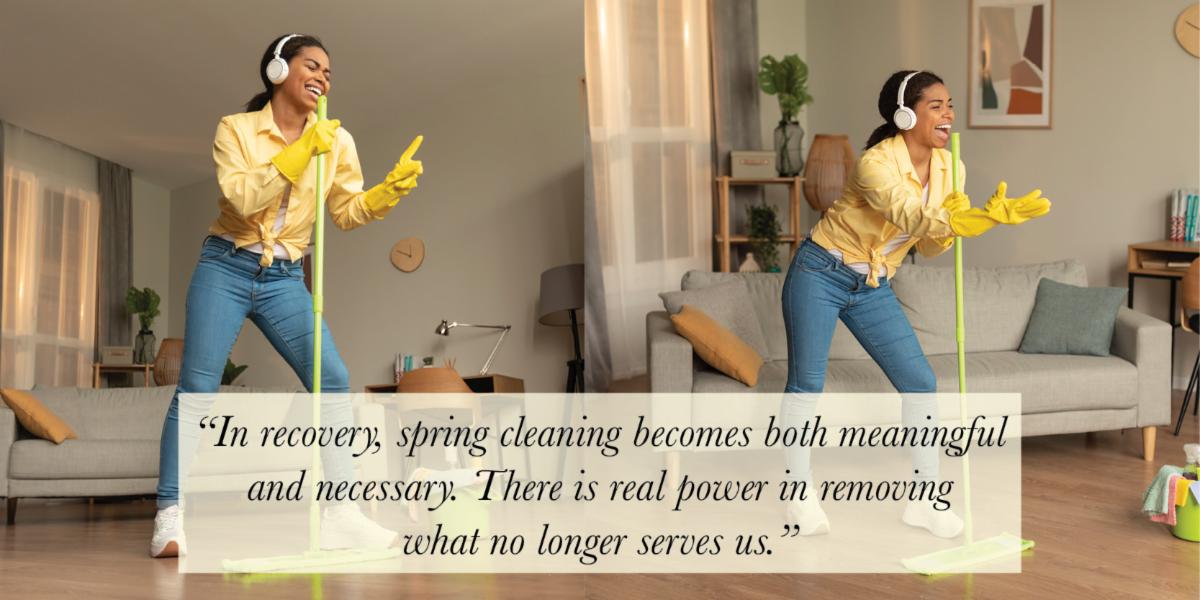
When we hear the phrase spring cleaning, most of us picture a long, overly ambitious to do list we instantly regret. Suddenly we are deep cleaning the house, switching out blankets, rearranging furniture for reasons we can’t explain, and confronting the mountain of stuff we have collected or pretended not to see all year.
This is the season of hard questions like, Why do I own seven mismatched phone chargers? And what exactly was my plan for this broken lamp?
But at its core, spring cleaning is simple. It is sorting through what we no longer need, clearing out what takes up unnecessary space, and making room for something new. And once the clutter is gone, something almost magical happens. The air feels lighter. The house feels calmer. Your brain stops screaming every time you open that one terrifying closet.
There is real power in removing what no longer serves us. We feel clearer, more grounded, and maybe even a little more capable of handling life without wanting to set everything on fire.
Chaos and Clutter in Active Addiction
Active addiction tends to turn life into a full‑scale mess. Not just in one area, but everywhere. Like a cluttered house, life can quickly fill up with unhealthy habits, strained relationships, unresolved emotions, and coping strategies that once helped us survive but now just take up space.
Eventually, all that clutter makes it hard to move forward. It is tough to build something new when you keep tripping over the same old stuff.
Spring Cleaning in Recovery
In recovery, spring cleaning becomes both meaningful and necessary.
What does that look like? It starts with intentional evaluation. No judgment. No shaming yourself for the mess. Just a compassionate, honest look at what is actually helping and what has been sitting there collecting dust.
From there, it is about letting go of what no longer serves you and making room for boundaries, supports, and habits that allow growth and healing. Think less chaos, more breathing room.
Financial Spring Cleaning
Addiction often leaves behind financial chaos like unpaid bills, impulsive spending, debt, or the strong belief that if we do not look at it, it might go away. Financial spring cleaning means taking a simple, realistic look at money. Creating a basic budget, facing responsibilities instead of avoiding them, seeking support when needed, and letting go of spending used to soothe emotions. The goal is not perfection, but slowly rebuilding stability, trust, and a sense of control over finances.
Spiritual Spring Cleaning
Addiction can disconnect us from spirituality, leaving people feeling numb, angry, or detached from meaning and values. Spiritual spring cleaning involves releasing shame‑based beliefs, reconnecting with what truly matters, and exploring practices like mindfulness, prayer, meditation, or time in nature. It may also mean redefining spirituality on your own terms rather than how it is “supposed” to look. This is not about adopting a belief system, but about creating space for grounding, meaning, and connection.
Emotional Spring Cleaning
Unprocessed emotions are like overstuffed drawers. We keep shoving things in and hope nothing bursts open at the worst moment. Emotional spring cleaning means identifying feelings that were numbed or avoided, learning healthier ways to tolerate discomfort, and releasing guilt, shame, and self‑blame that no longer serve healing. Through tools like therapy, journaling, or group support, space is created for self‑compassion, emotional regulation, and far fewer surprise meltdowns over minor inconveniences.
Social Spring Cleaning
Not all relationships are meant to come with us into recovery. Some made sense once. Some were built in chaos. Some have simply run their course. Social spring cleaning involves setting boundaries with people who enable unhealthy behaviors, letting go of relationships rooted in harm or control, and creating space for connections grounded in honesty, safety, and respect. It can also mean learning to be alone without feeling lonely. While this process can be painful, it makes room for relationships that support growth rather than sabotage it.
Cognitive and Mental Spring Cleaning
Addiction often leaves the mind cluttered with distorted thinking like catastrophizing, all or nothing beliefs, and a very loud, very unhelpful inner narrator. Mental spring cleaning involves noticing unhelpful thought patterns, challenging beliefs formed in survival mode, and reducing mental clutter through grounding and mindfulness. Replacing automatic self‑judgment with curiosity and flexibility creates space for clearer thinking and more intentional, less reactive choices.
Physical Spring Cleaning
The body remembers. Stress, addiction, and trauma leave their marks, even when the mind is ready to move on. Physical spring cleaning means caring for the body on purpose. This can look like improving sleep, nutrition, and movement, finally addressing neglected medical or dental care, reducing harmful coping behaviors, and learning to listen to the body instead of pushing past its limits. Practicing rest as a form of recovery rather than weakness helps support every other area of healing.
Occupational Spring Cleaning
Addiction often disrupts work life, showing up as instability, burnout, loss of purpose, or difficulty maintaining structure. Occupational spring cleaning involves reflecting on whether work supports recovery and personal values, setting healthier boundaries, and addressing shame or fear tied to performance. It may also include letting go of survival jobs when possible, exploring new goals or education, and redefining success beyond productivity. Clarifying occupational direction helps restore purpose, routine, and self‑efficacy, which support long‑term recovery.
Making Room for What Comes Next
Spring cleaning, whether at home or in recovery, is not about judgment. It is about discernment. It is noticing what clutters our lives, drains our energy, and keeps us stuck, then slowly and imperfectly deciding to make some room. Recovery is growth, and growth needs space. Sometimes the bravest thing we can do is clear out what no longer serves us so we can finally breathe without tripping over yesterday’s mess.
T’Mira Looby, M.S., NCC
Primary Therapist
Crossroads Centre Antigua